Residential Proxies Explained How They Reveal Hidden Prices in 2026
· based on the channel Lukas Margerie
Residential proxies are specialized proxy servers that route internet traffic through IP addresses assigned to real residential devices by Internet Service Providers (ISPs). Unlike traditional VPNs or data center proxies that use IPs from centralized servers, residential proxies appear as ordinary home users to target websites. This makes them essential tools in 2026 for uncovering hidden or region-specific pricing, avoiding blocks, and conducting reliable web scraping.
Understanding Residential Proxies and How They Work
Residential proxies use IP addresses provided by ISPs to real households, which means websites see requests as coming from actual users rather than data centers. This prevents common anti-scraping measures that flag or block data center IPs. Each request can be routed through a different residential IP, often rotating automatically, which enhances anonymity and reduces the risk of being detected or banned.
- The proxy provider owns a large pool of residential IPs worldwide.
- Requests are sent through these IPs based on the desired geographic location.
- Websites perceive the requests as local traffic, providing region-specific content or pricing.
This ability is crucial for applications like price comparison, market research, and competitive analysis.
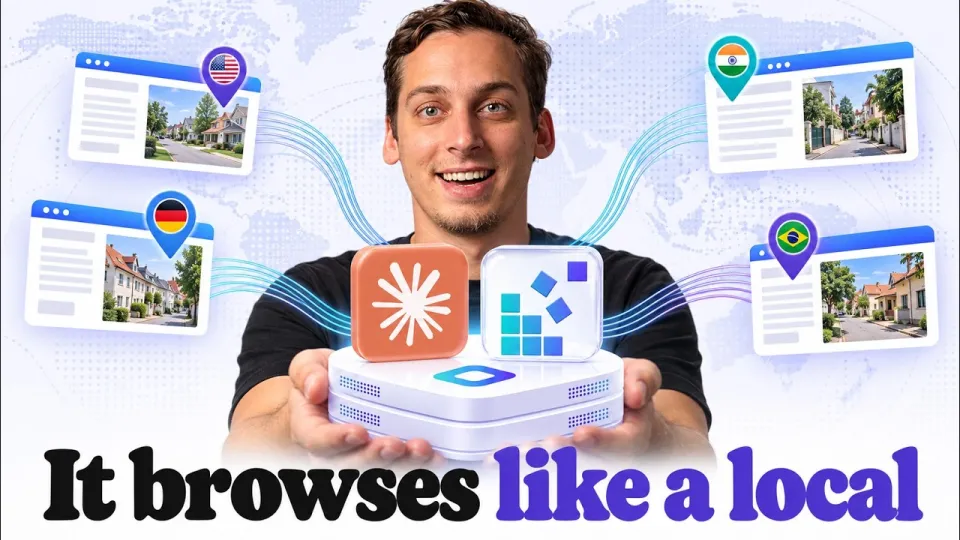
Video: This Claude Code Agent Uses Residential Proxies to Find Hidden Prices
Comparing Residential Proxies with VPNs and Data Center Proxies
VPNs typically route all your internet traffic through one server, usually with a data center IP address. These IPs are often flagged by websites for being non-residential, leading to blocks or CAPTCHAs. In contrast, residential proxies use IPs from real home users, making detection much harder.
Key differences:
- VPNs: Single or limited IPs, often from data centers, suitable for personal privacy.
- Data Center Proxies: Fast but easily detected and blocked.
- Residential Proxies: Slower but highly reliable for web scraping and geo-targeting.
This distinction explains why residential proxies are preferred for bypassing geo-restrictions and uncovering hidden prices inaccessible through VPNs.
Rotating Residential Proxies and Geo-Targeting
Rotating residential proxies assign a new IP address for each connection or request. This rotation helps evade bans and rate limits imposed by websites. Additionally, residential proxies allow precise country targeting by selecting IPs from specific regions, enabling users to see localized content and prices.
Steps to utilize rotating residential proxies for geo-targeting:
- Choose a proxy service with a large residential IP pool.
- Specify the country or region for the IP address.
- Use rotating proxies to send requests through different IPs within that region.
- Collect data that reflects genuine local user experiences.
Such geo-targeting is invaluable for businesses monitoring SaaS pricing, streaming services, or e-commerce platforms worldwide.
Web Scraping Pricing Pages with Residential Proxies and AI Agents
Combining residential proxies with AI-powered web scraping tools allows efficient extraction of pricing data from websites that serve different prices based on location. An example is the Claude Code agent, which automates scraping using residential proxies from DataImpulse to access pricing pages in countries such as the US, Germany, Brazil, and India.
This approach offers:
- Automatic rotation of IPs to avoid detection.
- Access to localized pricing without manual VPN switching.
- Integration with tools like Playwright for browser automation.
- Aggregation and teardown of pricing data for analysis.
This technology enables businesses to identify regional pricing gaps in popular services like Spotify, Canva, ChatGPT, and Netflix, informing competitive strategies.
Typical Questions About Residential Proxies
Many users wonder about the cost efficiency, legality, and reliability of residential proxies. Residential proxies tend to be more expensive than data center proxies due to their complexity and the legitimacy of their IPs. However, they provide a higher success rate for scraping and geo-targeting tasks.
Legality depends on the usage context; scraping public data is generally legal but must comply with website terms of service. Reputable providers like DataImpulse ensure ethical IP sourcing.
Useful Links
- DataImpulse residential proxies for web scraping and geo-targeting: https://dataimpulse.com/?utm_source=youtube&utm_medium=video&utm_campaign=lukasmargerie
- Claude Code AI agent: https://www.claude.com/product/claude-code
- Playwright automation framework: https://playwright.dev
Итог
Residential proxies are indispensable tools in 2026 for accessing region-specific content and prices that VPNs or data center proxies often cannot reveal. Their use in conjunction with AI agents like Claude Code automates and enhances web scraping, enabling detailed pricing analysis across multiple countries. For anyone looking to uncover hidden prices or conduct reliable geo-targeted data collection, residential proxies from providers like DataImpulse offer a robust solution. Explore their offerings to gain a competitive advantage in global markets and follow the expert insights from Lukas Margerie's channel for up-to-date applications and tutorials.
Key takeaways
- Residential proxies route requests through real home ISP IPs, avoiding detection.
- They enable accurate geo-targeting for price comparison across countries.
- Rotating residential proxies provide fresh IPs on each connection for stealth.
- Claude Code agent uses these proxies to scrape pricing pages automatically.
- DataImpulse is a leading provider of residential proxies for web scraping.
Questions & answers
What is the main advantage of residential proxies over VPNs for web scraping?
Residential proxies use IP addresses from real residential users, making them less likely to be flagged or blocked by websites compared to VPNs that typically use data center IPs.
How do rotating residential proxies improve data scraping reliability?
Rotating proxies assign a new IP for each request or connection, preventing detection and bans by distributing traffic across many IPs within the target region.
Are residential proxies legal to use for accessing region-specific pricing?
Yes, using residential proxies is legal when scraping publicly available information, but users should comply with website terms of service and avoid unauthorized data collection.
Which residential proxy service was used in the example to uncover hidden prices?
DataImpulse residential proxies were used alongside the Claude Code agent to access and compare pricing pages from different countries.
Source: This Claude Code Agent Uses Residential Proxies to Find Hidden Prices · Markdown version